Quantum Physics And Paradoxes In Christian Theology

The last century ushered in the age of quantum physics.   In the study of quantum physics,  physicists realize the sub atomic particles do not react to the Newtonian principles of physics held since the 17th century.

The physicist Max Planck discovered light energy came in dsicreet packets known as quanta and not just in waves and the duality of particle-wave in light became known.

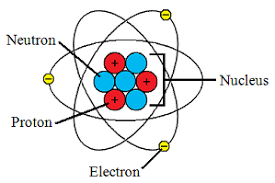
The atom itself is full of mystery.   Almost 99.999999999999% is empty space.  When left on its own,  it acts in random ways but when they are lumped together to form an object,  they act normally as they do in classical physics.

Scientists have come to accept a principle formulated by Dr Bohr, the principle of complementarity to explain 2 seemingly opposite pictures of a phenomenon.

This principle simply means that the use of certain concepts in the description of nature automatically excludes the use of other concepts, which however in another connection are equally necessary for the description of the phenomenon, as re-phrased by Dr Wheeler.    The duality nature of light in particle or wave  is one example.

This “nature of complementarity” can also be redefined as the existence of two apparently contradictory concepts to fully describe reality.

Though this principle is yet to be proven, Dr Wheeler said,” Complementarity is battle-tested. No one knows an acceptable alternative. The new viewpoint is part of the working attitude of the great majority of physicists of this generation. It would be hard to name a part of science better established than the quantum principle, more thoroughly analyzed for self-consistency, or able to account for a more fantastic range of experience. There is no going back on complementarity !”

This principle seems to mirror the several paradoxes in Christian theology.

  1. The righteous status of a Christian and his still fallen state.
  2. The dual nature of Christ.
  3. Faith and works.
  4. God’s sovereignty and human responsibility.

The apparent paradoxes in Christian theology, instead of being used as proof of falsehood of the Christian faith, actually find an ally in modern physics with similar experience.

I see the sub atomic particles as a good illustration of God’s sovereignty and human responsibility.   We can see the absolute freedom of the atom in random freewheeling around by itself but when lumped together to form an object, they follow strictly to natural laws. Likewise, we have free will to make choices but ultimately God is sovereign over all details.

For further reading :  http://www.asa3.org/ASA/PSCF/1956/JASA12-56Bube.html
A Spirit-filled Life

Some of the important ministries of the Holy Spirit are : pointing us always to Christ our Lord, helping us to fulfill the Law as in sanctifying us, leading us into God’s will and empowering us with gifts for service.

As we learn to walk by the Spirit, that is, fixing our heart on the triune God, meditating on His Word, communing with Him in prayer and ministering to one another in the One Body of Christ, we will start to experience His ministries in our lives in glorifying Christ our Lord.

(Eph 5:18-21. Do not get drunk on wine, which leads to debauchery. Instead, be filled with the Spirit, speaking to one another with psalms, hymns, and songs from the Spirit. Sing and make music from your heart to the Lord, always giving thanks to God the Father for everything, in the name of our Lord Jesus Christ. Submit to one another out of reverence for Christ.)

And the following physical evidence of being filled daily by His Spirit will manifest :

  1. Singing spiritual songs and making music from our hearts to the Lord and to one another.
  2. Always giving thanks to God for everything in the name of Jesus our Lord.
  3. Submitting to one another and bearing each other’s burden for the sake of Christ our Lord.

Understanding The Book Of Revelation

Rev 1:19

19 Write therefore the things that you have seen, those that are and those that are to take place after this.

Contrary to popular belief, the book of Revelation is not difficult to understand if it is read literally with the major periods of the Rapture, the 7 year Tribulation period, the Second Coming of our Lord, His 1000 year glorious reign,  and the coming reuniting of the New Heaven and Earth in the right chronological order.  (The possible confusion is the placing of the chronological order of the Seal, Trumpet and Bowl judgments and certain description which is clearly figurative.  I believe in the pre-tribulation Rapture and so I see the apparent difficulty in figuring out the chronological order of various judgments is of little consequence to the believer.)

The things that John the Apostle was told to write down in Rev 1:19 by our Lord were :

  • “Things that he had seen”

Which were his vision of the Lord and the Lord’s explanation of the symbols surrounding Him in chapter 1.

  • “Things that are”

Which were the Lord’s letters to the churches in Asia Minor from chapter 2 to 3.

  • “Things that are to take place in the future”

Which were the “Seal” judgments, “Trumpet” judgments and “Bowl” judgments of Israel and the nations during the 7 year Tribulation period, the return of our Lord, the victory over the enemy, the Lord’s glorious 1000 year reign, the reuniting of heaven and earth; and the eternal state in the remaining chapters.

The outline is as follows :

John’s vision of the Lord and His explanation of the symbols surrounding Him. Chapter 1
The Lord’s letters to the 7 churches in Asia Minor Chapter 2 – 3
The Vision of God’s Throne and Worship in Heaven

The Seven Seal Judgments

Chapter 4

Chapter 5 – 6

Sealing 144,000 Jews of the 12 Tribes of Israel Chapter 7
The Seven Trumpet Judgments Chapter 8 – 9
The Seven Thunders Chapter 10
The Two Witnesses Chapter 11
War in Heaven and Earth Chapter 12
The Beast and the False Prophet Chapter 13
Warnings Of 3 Angels, and Call and Harvest of the Earth by 3 Angels Chapter 14
The Seven Bowl Judgments Chapter 15 – 16
The Judgment of Babylon – the religious, political and financial system of the world Chapter 17 – 18
The Return of our Lord Chapter 19
The Judgment of Unbelievers Chapter 20
The New Heavens and New Earth Chapter 20 – 21
Concluding Blessing and Warning as regards to the Prophecy Chapter 22

How is one blessed when he heeds what he reads and hears the words of this prophecy ?  Rev 1:3.

L Ralph Rohr, M.D., author of The Revelation of Jesus Christ—Comfort or Confusion, gave some of these reasons why we should read the Book of Revelation and be blessed with hope :

  • We should read Revelation, because it is the only book of the Bible that promises a blessing to those who read and heed what it says. This promise is given seven times throughout the book (Revelation 1:3; 14:13; 16:15; 19:9; 20:6; 22:7; 22:14).  Seven is the number that signifies complete perfection.  God promises His full and perfect blessing to those who study His Revelation of Jesus Christ.
  • The entire Bible is about Jesus, but different parts of Scripture reveal Jesus in different ways. In the Old Testament we see Jesus in shadows and prophecy.  In the four Gospels we see Jesus in His humiliation in the flesh.  In the New Testament epistles we see Jesus as our moral Virtue and Friend interceding for us with the Father.  But only in Revelation do we see Jesus as He presently and eternally Is—in all of His glorious reality on the throne of Heaven leading and securing His saints, who are His Bride, the Church (Rev. 4 – 5).
  • Revelation is exciting and reassuring. The many horrible and beautiful scenes that John sees explain what is happening in the world today, and comfort the saints in their tribulation.  John is told that what he sees is coming SOON, not sometime thousands of years in the future!  Thus Revelation reveals history as we saints are living it between the first and second advents (comings) of Jesus into our world.  Furthermore, Revelation shows the inevitable outcome of that history, which is victory in Jesus!  (Rev 19:6-16)
  • Revelation explains suffering and pain. All people experience suffering and pain and death in this fallen world where Satan and his beasts deceive and dominate human governments and religions.  True Christians suffer when they tell the story of Jesus and uphold Christ as Savior.  But their suffering is as nothing beside their eternal joy and glory (2 Cor 4:17 – 18).  Revelation shows that the saints are victorious over every worldly circumstance and are singing a new song on Mount Zion (Rev. 14:1-3)
  • Revelation transforms our view of death. For true Christians, death is not a bane but a blessing (Rev 14:13; 20:6; Psa 116:15).


Be True Sons And Not Illegitimate Children

Deuteronomy 8:2,3,5

2 And you shall remember the whole way that the LORD your God has led you these forty years in the wilderness, that he might humble you, testing you to know what was in your heart, whether you would keep his commandments or not.
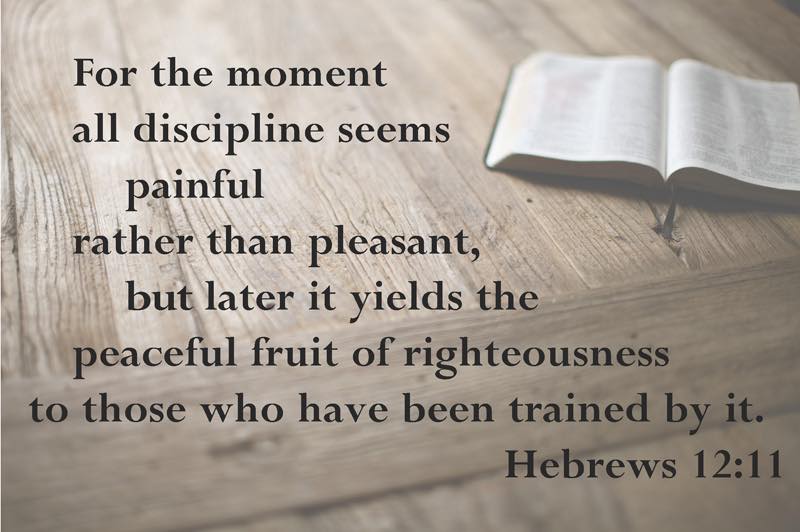
3 And he humbled you and let you hunger and fed you with manna, which you did not know, nor did your fathers know, that he might make you know that man does not live by bread alone, but man lives by every word that comes from the mouth of the LORD…Know then in your heart that, as a man disciplines his son, the LORD your God disciplines you.

We should know the blueprint of Christlikeness, the Law, is summarized into two commandments – to love God and to love your neighbor. That is the pre-destinating purpose of God to conform those whom He called to be like His Son. Rom 8:29.

So God ensures all things – both good and bad – to work for good as He disciplines us as true sons and not illegitimate children. Rom 8:28, Heb 12:3-11.

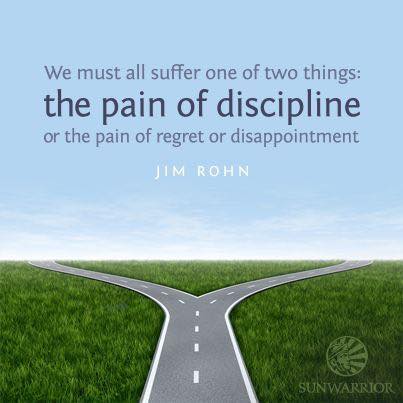
Like the Israelites going through the wilderness before going to the Promised Land, this life of ours is all about training in Christlikeness or Love.  Such is the training in my humble opinion:

1. Personal storms or suffering are to train us in Love, Peace and Joy.

2. Our neighbor’s storms and suffering are to train us in Gentleness, Kindness and Goodness.

3. Tests and temptation (which God allows) are to train us in Patience, Faithfulness and Self Control.

Because true sons will live by EVERY word that comes from the mouth of God, they will bear the WHOLE fruit of the Spirit.

Chalcedonian Creed

The Chalcedonian Creed was adopted at the Council of Chalcedon in A.D. 451. Chalcedon was an early centre of Christianity located in Asia Minor. The Council was the fourth of the Ecumenical Councils that are accepted by Chalcedonian churches which include the Eastern Orthodox, Catholic, and most Protestant churches. – Wikipaedia.

Chalcedonian Creed

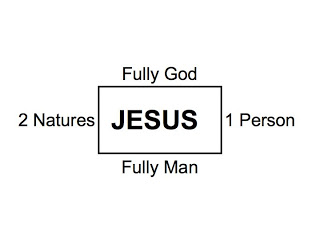
  1. Jesus has two natures — He is God and man.
  2. Each nature is full and complete — He is fully God and fully man.
  3. Each nature remains distinct.
  4. Christ is only one Person.
  5. Things that are true of only one nature are nonetheless true of the Person of Christ.
  • (copied from an article by John Piper).

Lord Jesus has always been God from eternity past to eternity future.  But He has not always been man.  He took on the human nature when He incarnated 2000 years ago.  He is not God minus some elements of His divine nature then, but fully God plus one new nature – the nature of man.

In the gospels, we read of His miracles and exploits which proved His omnipotence, omniscience and omnipresence.

Yet there was an attempt by the NAR prophets to twist the doctrine of Christology that He was just mere man without His divine attributes when He was on earth.  All His miracles and exploits were the result of the enabling power of the Holy Spirit dwelling in Him.  This false teaching was to make their followers believe that they could perform the same miracles as mere men with the enabling power of the Holy Spirit in them.

In John 2:18-22,  we read that He as fully God could raise Himself up in 3 days.

(Jesus answered and said to them, “Destroy this temple, and in three days I will raise it up.” Then the Jews said, “It has taken forty-six years to build this temple, and will You raise it up in three days?” But He was speaking of the temple of His body.)

In Mark 2:1-12, we learned that He had the authority on earth as God to forgive sins.


The Christian And Politics

The Only Commission

The only commission given to the Christian is to save souls and make disciples.  And not to effect policy change in legislating morality.  Legislating such change cannot permanently change human hearts.  Only the gospel, through the power of the Holy Spirit, can effect real change in society.  We are to share the gospel to everyone but when we take sides in politics,  we end up losing the evangelism focus.

The Sovereignty Of God

All governments are ordained by God.  God is sovereign over all the affairs of the world and we can trust Him over all national and foreign affairs.  God has revealed through His Word how the world will end with lawlessness increasing by the day till it climaxes.  We are not to be alarmed and we should have hope because we are already pre-warned.   As such,  it is something we cannot stop.  We can never make any society truly righteous until Christ our Lord comes again and set up His perfect Kingdom.  Instead of political activism, we should glorify God in our little sphere of influence by exalting our Lord through good works,  witnessing,  and exhibiting good conduct.

Submission To Governing Authorities

Our Lord came in a time where there was slavery, persecution and oppression.   He never tried to effect political change although the people were looking forward to it.  Instead He said,” Render to Caesar the things that are Caesar’s, and to God the things that are God’s.”  Matt 22:21.  Instead of political revolution,  He started a spiritual revolution in the hearts of men.

During  the apostles’ time,  the believers faced severe persecution under the wicked Nero.  Yet Paul and Peter exhorted us to submit to the governing authorities and live godly exemplary lives.  Rom 13:1.  1 Pet 2:12-15.   We are also exhorted to pray for those in authority over us and the salvation of their souls so that we can live tranquil and quiet lives in all godliness and dignity.  1 Tim 2:1-2.   Titus 3:1-2.   So when we see our leaders act unrighteously,  the first response is to pray rather than protest, since it is God who ordain these governments in the first place.

Citizenship In Heaven Not Earth

Our true citizenship is in Heaven.   Though we are in the world, we are not of the world.   Our priorities are to advance the Kingdom of God and not kingdom of the world.  So when we spend time on making the world a better place to live,  is that advancing the Kingdom of God or kingdom of the world ?  Even if we manage to Christianize governments through political means,  do you think we can change the heart of the non Christian society through political power instead of the power of the Holy Spirit ?  We should pursue spiritual pursuits instead of political pursuits.

  • gleaned from an article by Dr John MacArthur, “God, Government And The Gospel”.


Gray Areas In Life

In many matters of conscience in which Scripture does not address clearly the appropriate response,  should the believer simply have the freedom to act as he wishes ?

Can a believer enjoy any entertainment ?

Can a believer enjoy any music ?

Can a believer enjoy any hobby ?

Is it correct to say that a believer can do what he wants to do since he is free in Christ ?

It is true that the Bible does not mention specifically every possible decision a believer may face in life, but it does address all choices with general principles that govern Christian freedom and conduct.

Here are some principles which I gleaned from the excellent book, Right Thinking In A World Gone Wrong, by Dr John MacArthur, that will help us to make the right decision in life which will glorify God as the main goal.

1.  The Edification Principle.  Will this activity produce spiritual benefit ?

1 Cor 10:23.   “All things are lawful,” but not all things are helpful. “All things are lawful,” but not all things build up.

Unless something is profitable and helpful to the spiritual good of others,  it is not worth doing.

2.  The Enslavement Principle. Will this activity lead to spiritual bondage ?

1 Cor 6:12.   “All things are lawful for me,” but not all things are helpful. “All things are lawful for me,” but I will not be dominated by anything.

Anything that dominates us and takes that rightful place of Jesus Christ as our Lord will bring us ruin at the end.

3.  The Exposure Principle. Will this activity expose my mind or body to defilement ?

1 Cor 6:19-20.    Or do you not know that your body is a temple of the Holy Spirit within you, whom you have from God? You are not your own, for you were bought with a price. So glorify God in your body.

Anything that exposes us to the sinful nature of the society is to be avoided obviously.

4.  The Esteem Principle. Will this activity benefits others, or cause them to stumble ?

1 Cor 8:8-9.  Food will not commend us to God. We are no worse off if we do not eat, and no better off if we do. But take care that this right of yours does not somehow become a stumbling block to the weak.

If any activity that causes a brother to stumble because of his weaker conscience, we should not insist in doing it for the sake of love for the brother.

5. The Evangelism Principle. Will this activity further the cause of the gospel ?

Matt 28:18-20.  And Jesus came and said to them, “All authority in heaven and on earth has been given to me. Go therefore and make disciples of all nations, baptizing them in the name of the Father and of the Son and of the Holy Spirit, teaching them to observe all that I have commanded you. And behold, I am with you always, to the end of the age.”

Christians should always consider whether their action in any activity will affect their witness to a watching world.  1 Cor 10:32-33.  1 Cor 9:19-23.

6.  The Ethics Principle. Will this activity violate my conscience ?

We sin if we act in any way that goes contrary to the convictions of our own faith and good conscience.   If our conscience is troubled by what we are doing,  don’t do it.

7.  The Exaltation Principle. Will this activity bring glory to God ?

1 Cor 10:31.  So, whether you eat or drink, or whatever you do, do all to the glory of God.

We are created to glorify God and enjoy Him forever.  If any activity that will bring dishonor to His name,  don’t do it.

The Inspiration And The Canonization Of The Bible

(All the contents of this article is adapted or gleaned from the book, How To Get The Most From God’s Word by Dr John MacArthur, Jr.)

Revelation And Inspiration

Revelation is the message from God and Inspiration was the primary method of delivering that message to mankind.  Inspiration is the act of the Holy Spirit in revealing to human writers the message that God intended to comprise the Bible.  The inspiration was not only in concepts and in thoughts but also in the very words.

1 Cor 2:13.  We also speak, not in words which man’s wisdom teaches but which the Holy Spirit teaches.

1 Pet 1:10-11 NLT.  10 This salvation was something even the prophets wanted to know more about when they prophesied about this gracious salvation prepared for you. 11 They wondered what time or situation the Spirit of Christ within them was talking about when he told them in advance about Christ’s suffering and his great glory afterward.

From 1 Pet 1:10,11,  it is amazing to note that when the apostles received the prophecy from God, they did not understand and they simply recorded what they were told.

How can the Bible be the Word of God and at the same time, for example, the words of Paul ?  God formed the personality of the writer.  God made Paul into the man He wanted him to be.  God controlled his heredity and his environment. When the writer reached the point that God intended, God directed and controlled the free choice of the man so that he wrote down the very words of God. God literally selected the words out of each author’s own life, out of his personality, his vocabulary, and his emotions.  The words were man’s words, but that man’s life had been so framed by God that they were God’s words as well.  So we can say that Paul wrote Romans, and we can say God wrote it. Both statements are correct.  2 Sam 23:2.

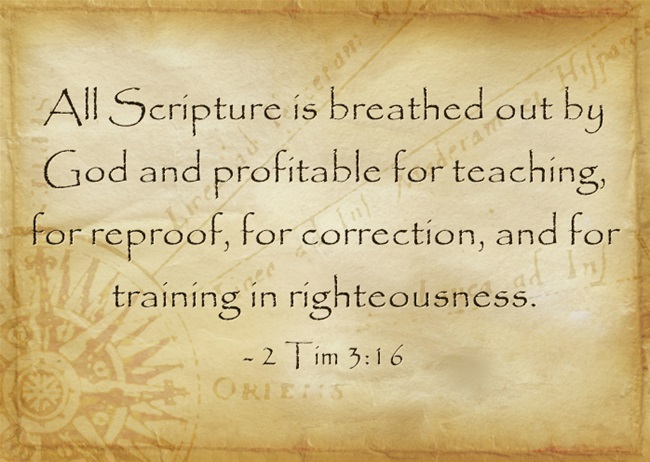
2 Tim 3:16. ESV.  16 All Scripture is breathed out by God and profitable for teaching, for reproof, for correction, and for training in righteousness.  Just like how God spoke out of His mouth and breathed the universe into existence (Psalms 33:6),  God breathed the Bible into existence.

Canon

The word Canon means measuring rod or standard.  It was Athanasius, Bishop of Alexandria who referred to the completed NT in AD 350 as the canon.  The final choice of the 27 NT books were held up by Athanasius and other early church fathers.

The following were the tests used by the early church fathers in deciding the final canon of the NT.

  1. Was the book authored by an apostle or someone close to the apostle ?
  2. Did the content square off with apostolic doctrine ?
  3. Was the book widely read and used in the churches ?
  4. Was the book recognized and used by the next generations after the early church ? (Polycarp, Justin Martyr, Tertullian, Origen, Eusebius,  Athanasius, Jerome and Augustine.)

As for the OT,  Jewish tradition holds that the final compilers of the OT canon were part of the Great Synagogue, that school of scribes founded by Ezra after the Jews returned from captivity in Babylon. There were some apocryphal books not added into the OT canon because :

  1. They were written long after the canon was completed about 400 BC.
  2. None of these apocryphal books claim divine inspiration and some even openly disclaim it.
  3. They contain errors of fact and teach questionable ethics and doctrines. For example, the writings justify suicide and assassination and also teach praying for the dead.

Infallibility, Inerrancy And Authoritativeness

The Chicago Statement, drafted at a summit conference called in October 1978 by the International Council on Biblical Inerrancy to affirm the authority of Scripture, explained well with this statement :

“Infallible signifies the quality of neither misleading nor being misled and so safeguards in categorical terms the truth that Holy Scripture is a sure, safe, and reliable rule and guide in all matters.  Similarly, inerrant signifies the quality of being free from all falsehood or mistake and so safeguard the truth that Holy Scripture is entirely true and trustworthy in all its assertions.”

If the Bible is infallible and inerrant, it must be the final word – the highest standard of authority – because it is God’s very Word.

Envy And Jealousy

James 3:16

For where you have envy and selfish ambition, there you find disorder and every evil practice.

Prov 3:31-32

Do not envy a man of violence and do not choose any of his ways,  for the devious person is an abomination to the Lord, but the upright are in his confidence.

Prov 6:34-35

For jealousy makes a man furious, and he will not spare when he takes revenge.   He will accept no compensation; he will refuse though you multiply gifts.

Prov 14:30

A tranquil heart gives life to the flesh, but envy makes the bones rot.

Prov 23:17-18

Let not your heart envy sinners, but continue in the fear of the Lord all the day. Surely there is a future, and your hope will not be cut off.

Prov 24:1-2,19,20

Be not envious of evil men, nor desire to be with them, for their hearts devise violence, and their lips talk of trouble…Fret not yourself because of evildoers, and be not envious of the wicked, for the evil man has no future; the lamp of the wicked will be put out.

Prov 27:4

Wrath is cruel, anger is overwhelming, but who can stand before jealousy?

Two of the terrible grinds in life are envy and jealousy.   They rob us of peace.  We often pray for the much coveted blessings of peace and joy from God, yet ironically we chase these blessings away through our own sinful desires.

There is a difference between Envy and Jealousy. Envy is like a man with his hands empty of achievements or possessions that he desires and he finds it hard to swallow about people who have what he does not have at the moment. Jealousy is like a man having full of achievements or possessions in his hands, yet he worries about losing out to others who are fast “catching up”, or he is not happy with others having more than him.

The jealous guy will always occupy his position without giving up.  He will always strive to have more.  He will always strive to stay ahead with a very competitive attitude.  He will grind himself into a nervous wreck without pausing to learn to enjoy all the intangible things like relationship, friendship, nature and arts.

The envious guy will curse, not bless, others hoping in his or her heart that others will lose their possessions one day.   He will strive to attain these achievements or possessions in the shortest possible time. He is so sewn up with himself because he feels bitter towards all who have what he does not have (unlike the jealous guy who only has that sour taste in his mouth with few in his circle).

Sadly we see envy and jealousy even in Christian ministry today.

When a brother is wise, he invites irrational backbiting.

When a brother is capable in his ministry, he invites undermining.

When a brother shares his testimony of receiving God’s amazing providence in his life, he invites disbelief.

There is no meaningful ministry for a believer consumed by envy and jealousy for a Christian knows to be the greatest in God’s kingdom, he has to be the least and servant of all.

Envy and jealousy eat away at one’s soul. Our Lord Jesus has exhorted in so many parables to be rich towards God and not towards things, and to store treasure in heaven rather than accumulate perishable treasure on earth.  True peace and joy is only found in our Lord.   Rom 14:17.

One who succumbs to envy and jealousy and pursue the world is at enmity with God.  He cannot be a true disciple who has to surrender all idols to God and let God reign in his life.

Contentment with godliness is the only antidote. 1 Tim 6:6-10.  Contentment freeds us from greed which will consume us and anxiety which will torment us.

Christ Paid It All (Acronym 3)

Isaiah 53:4-6
Surely He has borne our griefs and carried our sorrows;
yet we esteemed Him stricken, smitten by God, and afflicted. But He was pierced for our transgressions; He was crushed for our iniquities; upon Him was the chastisement that brought us peace, and with His wounds we are healed. All we like sheep have gone astray; we have turned—every one—to his own way; and the Lord has laid on Him the iniquity of us all.

“And so what do we do?

We trust Him. We look forward to that day when we will stand before His throne, repeating the wonder that He died to save our souls. Yes, we will trust Him today, and forsake the foolish pursuits that used to consume our lives. We will stop condemning ourselves for past sins. We will relinquish the shame we’ve harbored for so long and we will abandon our self-absorbed efforts to make ourselves worthy. We will turn from our sin, we will trust Him, and we will sing. We will sing and,

Praise the One who paid our debt,
And raised our lives up from the dead.

Yes, we will sing, both now and forever.”   –   John Piper