Training In Righteousness

James 1:2-4 NASB

2 Consider it all joy, my brethren, when you encounter various trials, 3 knowing that the testing of your faith produces endurance. 4 And let endurance have its perfect result, so that you may be perfect and complete, lacking in nothing.

Heb 12:7-11 NIV

Endure hardship as discipline; God is treating you as his children. For what children are not disciplined by their father? If you are not disciplined—and everyone undergoes discipline—then you are not legitimate, not true sons and daughters at all. Moreover, we have all had human fathers who disciplined us and we respected them for it. How much more should we submit to the Father of spirits and live! 10 They disciplined us for a little while as they thought best; but God disciplines us for our good, in order that we may share in his holiness. 11 No discipline seems pleasant at the time, but painful. Later on, however, it produces a harvest of righteousness and peace for those who have been trained by it.

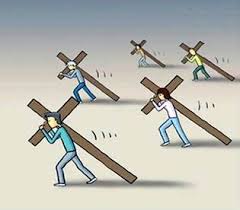
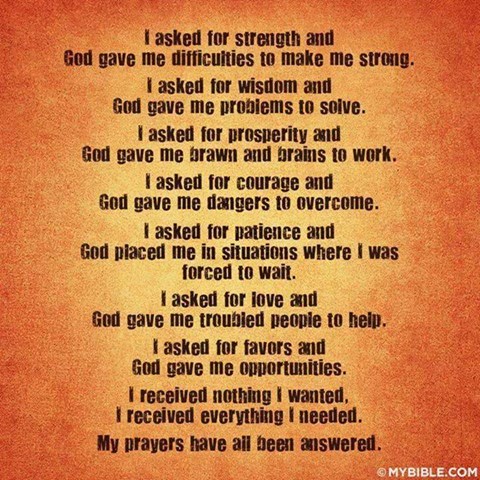
When we face hardship or trials, we are exhorted to endure.   We are to treat such trials as divine discipline and to expect them if we are sons of the living God.  If we endure, eventually we will gain peace and a harvest of righteousness having trained by it.

God’s Revealed Will for us is to conform us to be like His Son (Rom 8:28-29).   And so His discipline trains us in this manner to bear fruit of the Spirit :

  1.  Personal Trials.   Train us in love, peace and joy.
  2.  Our Neighbor’s Trials.  Train us in gentleness, kindness and goodness towards them.
  3.  Testing and Temptation.  Train us in patience, faithfulness and self-control.
training


Emptying The Gospel Of Its Power

There are presently 2 huge diabolical movements of deceiving the elect.   One is promoting a different gospel and has called itself the Grace Reformation.   The other is promoting a different Jesus and has called itself the New Apostolic Reformation.

The false prophets in both these movements will understandably masquerade themselves well as servants of righteousness and will lure away many professing believers as prophesized.  They should be very skillful in deception by disguising themselves as apostles of Christ.   Not surprising that they really call themselves Apostles in the New Apostolic Reformation as stated in 2 Cor 11:13-15.   And since they are so skillful in deception, the defense of their authenticity by their followers and sympathizers  – that they are humble, preach good biblical sermons on grace and do a lot of good to help the young people for example – surely fall short.  A “Berean” Christian should watch out for their doctrine of salvation and Christology instead.  For the master of these false prophets, the devil, surely will not promote the true gospel and true Jesus.

It is one thing to believe in the sovereign will of God that He still give spiritual gifts today and I sincerely believe;  but quite another to believe that signs and wonders are a necessity to share the gospel.   The following Scripture in Luke 16:30-31 dispels that premise.

Luke 16:30-31

30 And he said, ‘No, father Abraham, but if someone goes to them from the dead, they will repent.’ 31 He said to him, ‘If they do not hear Moses and the Prophets, neither will they be convinced if someone should rise from the dead.’

1 Cor 1:17

17 For Christ did not send me to baptize but to preach the gospel, and not with words of eloquent wisdom, lest the cross of Christ be emptied of its power.

As Paul was even careful not to empty the gospel of its power by eloquent wisdom like what the hyper grace false teachers did,  how much more would it be through signs and wonders ?

Our Lord had warned specifically in Matt 24:24 that false prophets will arise and perform great signs and wonders to lead astray even the elect in the last days and will He confuse the elect even more by empowering many to do signs and wonders as a necessity to share the gospel  as well ?

Though we have to be wary of the New Apostolic Reformation prophets who promote these signs and wonders as THE means of sharing the gospel emptying the gospel of its power and twisting the doctrine of Christology in the process, we should not dismiss or despise that God can still give such spiritual gifts today for certain unique circumstances on the other hand.   We are exhorted not to despise but to test these spirits.    1 John 4:1.  1 Thess 5:20-21.

Martin Luther, the champion of sola scriptura, said this, “The signs here spoken of (Mark 16:17-18) are to be used according to need.  When the need arises, and the gospel is hard pressed, then we must definitely do these signs, before we allow the gospel to be maligned and knocked down.”  –  Believer’s Bible Commentary.

img_0935


Trials And Temptation

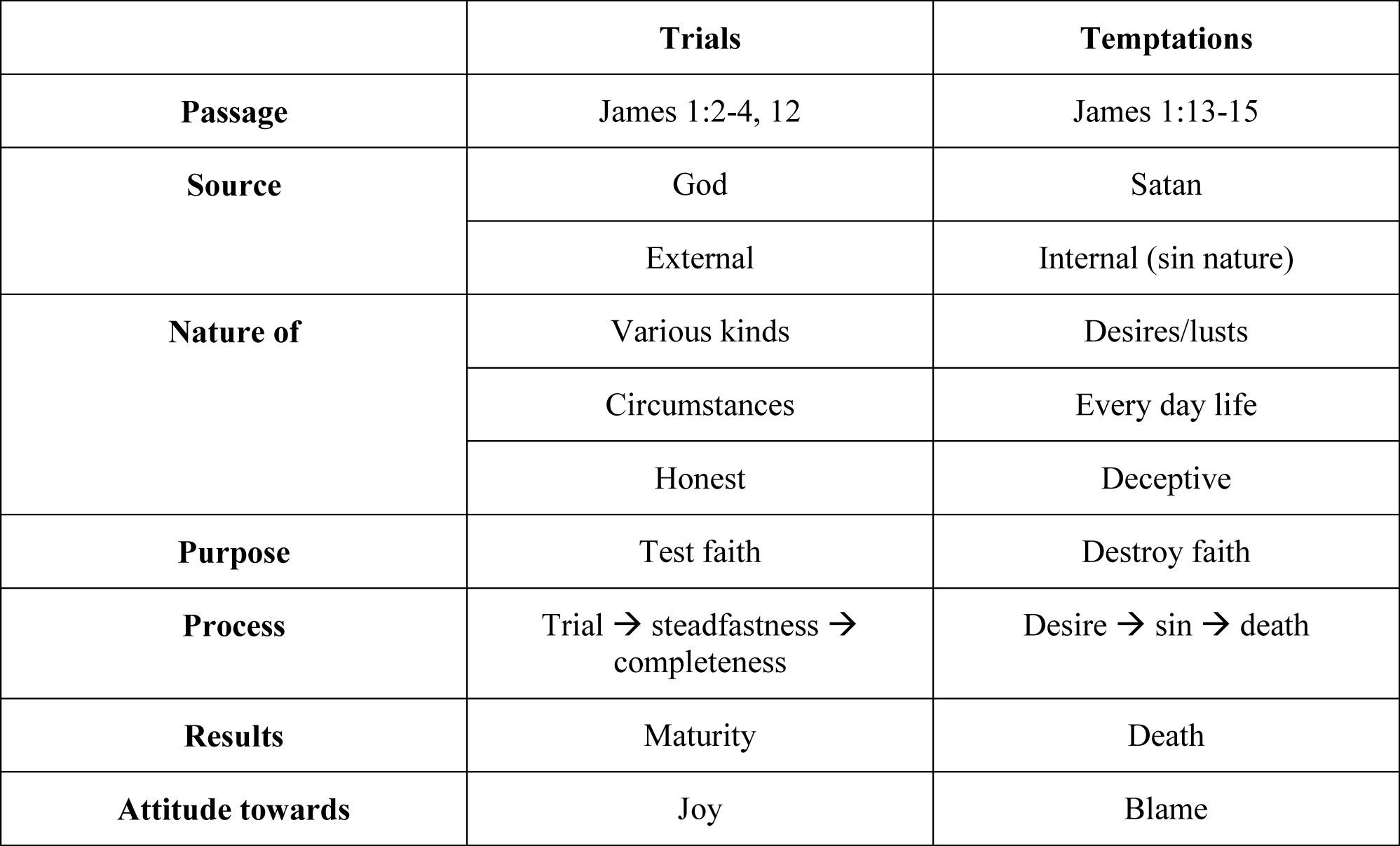
Although both trial and temptation are translated from the same Greek word “peirasmos”,  it is a world of difference between them.

Trial usually refers to morally neutral events that will affect us both emotionally and physically such as death of a loved one,  accident,  illness, failure, disappointment, unemployment, betrayal or rejection.  While temptation usually refers to evil desires in us, such as fornication or covetousness, waiting to be birthed into sin if one capitulates  to the conceived desire.

The following table highlighting the difference is given  by Pastor Mark Wheeler of New England.

https://wheelsms.wordpress.com/2013/05/01/of-trials-temptations/

trials-temptations


Many well meaning Christians have wrongly used the verse 1 Cor 10:13 to comfort those undergoing trials that God will not let them suffer such trials beyond which they cannot handle.  The verse refers to temptation and not trial.   And concerning temptation,  I am sure God will provide a way of escape through various means such as the convicting work of the Holy Spirit and His Word,  but it is one own’s volition if he or she allows the sin to be birthed.  James 1:13-15.

(1 Cor 10:13.  No temptation has overtaken you except what is common to mankind. And God is faithful; he will not let you be tempted beyond what you can bear. But when you are tempted, he will also provide a way out so that you can endure it.)

It is a fact that some believers have succumbed to taking their own lives when trial such as depression has taken a terrible toll on them.

Here are some of my thoughts concerning whether these believers are saved.  And you may form your own conclusion.

  1. Samson who committed suicide was listed among the heroes of faith in Heb 11.
  2. Suicide is the sin of murder (self murder) – I see taking the life of another is the same as taking the life of self. Salvation is not dependent on sin accounting or based on the last sin committed.
  3. Trials are morally neutral events affecting us emotionally and physically.

Church Discipline

1 Cor 5:9-13

I wrote to you in my letter not to associate with sexually immoral people— 10 not at all meaning the people of this world who are immoral, or the greedy and swindlers, or idolaters. In that case you would have to leave this world. 11 But now I am writing to you that you must not associate with anyone who claims to be a brother or sister but is sexually immoral or greedy, an idolater or slanderer, a drunkard or swindler. Do not even eat with such people. 12 What business is it of mine to judge those outside the church? Are you not to judge those inside? 13 God will judge those outside. “Expel the wicked person from among you.”

St Paul had given clear advice in the Scriptures on how to deal with professing believers who are immoral, greedy or are swindlers or idolaters and are unrepentant.  He had also taken preventive action in warning Timothy and the Corinthian church of certain so-called brothers who were causing great harm to his ministry. 1 Tim 1:20; 2 Tim 4:14.

Ex-communication instructed by Paul was necessary to protect the Corinthian church when these sinful believers were unrepentant after exhausting confrontation of sin privately and before the church with evidence and witnesses, and sincere attempts to restore them.  But ex-communication as a last resort is not an end in itself when Paul also instructed on possible future restoration and saving their souls.

The following sermon by Pastor Steven Cole gives an excellent overview of church discipline – the right steps to confront and to restore; and the necessity of ex-communication as a last resort in protecting the church.

http://www.fcfonline.org/content/1/sermons/081306M.pdf

cd


Thorn In The Flesh

2 Cor 12:7-9

7 So to keep me from becoming conceited because of the surpassing greatness of the revelations, a thorn was given me in the flesh, a messenger of Satan to harass me, to keep me from becoming conceited. 8 Three times I pleaded with the Lord about this, that it should leave me. 9 But he said to me, “My grace is sufficient for you, for my power is made perfect in weakness.” Therefore I will boast all the more gladly of my weaknesses, so that the power of Christ may rest upon me.

Just before this Scriptural passage, Paul wrote about having the miraculous experience of being caught up to the third heaven.

It is natural human weakness to be conceited when one has great miraculous experience, visions and revelations, even Paul was not an exception.

I believe the messenger of the enemy was not a physical infirmity or disease but a real person in either a demonic being, or servants of the enemy in the church masquerading as servants of righteousness like the “super apostles”, undermining his ministry. Or someone like Alexander who did great harm to his ministry whom he had to warn Timothy and the church.

And it is important to note that God was the One who sent the messenger of the enemy to harass and humble Paul for the very purpose of training him not to be conceited.

In what way was Paul conceited ?

How did Paul plead with God to remove the harassment ?   Is it by pleading that God would bind the enemy when He was the One who sent in the first place?   How did the enemy’s messenger harass him ?

It must be so troubling a trial that Paul had to plead 3 times.  But nevertheless when the Lord told him that His grace was sufficient for him,  Paul eventually realized that a successful ministry rested on a weak servant in order for Christ’s power to manifest even more in him.

1 Cor 1:27-31

27 But God chose what is foolish in the world to shame the wise; God chose what is weak in the world to shame the strong; 28 God chose what is low and despised in the world, even things that are not, to bring to nothing things that are, 29 so that no human being might boast in the presence of God. 30 And because of him you are in Christ Jesus, who became to us wisdom from God, righteousness and sanctification and redemption, 31 so that, as it is written, “Let the one who boasts, boast in the Lord.”

Lesson:

The Word of God is truly amazing for it anticipates that those who are given such surpassing gifts in the last days are likely to be conceited and this experience of Paul serves as a warning.  I see it as a comfort as well that when one encounters such trial will readily call to mind this experience of Paul and realizes God is in control and His power is made perfect in weakness and not strength in the surpassing gifts.

Postscript (12 March 2024) :

John MacArthur in his handbook mentioned,”Paul’s use of the word messenger (Greek, angellos, or angel) from Satan suggests the thorn in the flesh…was a demon, not a physical illness.  Of the 188 uses of the Greek word angellos in the NT, at least 180 refer to angels.  This particular angel was from Satan, a demon afflicting Paul.  Perhaps the best explanation for this demon is that he was indwelling the ringleader of the Corinthian conspiracy, the leader of the false apostles.  Through them he was tearing apart Paul’s beloved church and thus driving a painful stake through Paul.  Added support for this view comes from the context of chapters 10-13, in which Paul engages his enemies…The verb translated “buffet” always refer to ill treatment from other people (Matt 26:67; Mk 14:65; 1 Cor 4:11; 1 Pet 2:20).  Finally the OT frequently describes Israel’s enemies as thorns (Num 33:55; Josh 23:13; Ezek 28:24). ”

weakness

How Do We Await The Return Of Our Lord ?

After sharing about the signs of the end times in the Olivet Discourse in most part of chapter 24 in the gospel of Matthew came 4 parables in close sequence – the parable of the wise and wicked servants, the parable of the wise and foolish bridesmaids, the parable of the talents and the parable of the sheep and goats –  in which our Lord shared about the importance of faithfulness while eagerly awaiting His Second Coming.  The sheer number of 4 parables underscored how important is the message of awaiting watchfully and faithfully.

The parable of the wise and wicked servants and the parable of the wise and foolish bridesmaids gave contrasting attitude in awaiting His return.  The wicked servant did not believe the Master would return so soon and was slack in discharging his given responsibility and was evil in conduct as well;  while the foolish bridesmaids believed the Bridegroom would return very soon so they were careless not to bring extra oil for their lamps not expecting a delay.

Though our Lord gave frightening account of events preceding His return, He also exhorted us not to be alarmed and be troubled.  Matt 24:6.

In the parables of the wise and wicked servants, the talents and the sheep and goats, the main lesson to be learnt was to be faithfully discharging our responsibilities to care for God’s people conscientiously while we wait with an expectant heart and watchfulness.

The parables are not teaching that salvation is obtained through works.   But faithfulness in conscientious works will definitely accompany genuine faith.   The wicked servant,  the servant entrusted with one talent and the goats did not have genuine faith as evidenced by their lack of faithfulness and the utter folly of completely ignoring the commands of their Lord.   In all 4 parables, the fate of such unfaithful servants was banishment to a place where there is weeping and gnashing of teeth.

w1 w2


Faith Without Works (In Line With Repentance) Is Dead

Luke 19:1-11

Jesus entered Jericho and was passing through. A man was there by the name of Zacchaeus; he was a chief tax collector and was wealthy. He wanted to see who Jesus was, but because he was short he could not see over the crowd. So he ran ahead and climbed a sycamore-fig tree to see him, since Jesus was coming that way. When Jesus reached the spot, he looked up and said to him, “Zacchaeus, come down immediately. I must stay at your house today.” So he came down at once and welcomed him gladly. All the people saw this and began to mutter, “He has gone to be the guest of a sinner.”But Zacchaeus stood up and said to the Lord, “Look, Lord! Here and now I give half of my possessions to the poor, and if I have cheated anybody out of anything, I will pay back four times the amount.” Jesus said to him, “Today salvation has come to this house, because this man, too, is a son of Abraham. For the Son of Man came to seek and to save the lost.”

Zacchaeus was an excellent example of a repentant rich man.  This story was not proving that he earned salvation through his faith-works,  but rather his faith-work demonstrated that he fully comprehended the Kingdom of God and her values and repented.  His repentant faith with fruit or faith-work in line with repentance was really swift and salvation had come to him.  Jesus acknowledged him to be a son of Abraham in having true faith.

The rich young ruler’s response in Luke 18:15-30 was just the opposite of Zacchaeus’s.  He understood what the Kingdom of God entailed,  but he was not willing to repent and walked away sadly.  It would be futile for him just to have a change of mind and not of the heart as evidenced in the fact that he could not make that faith-work of renouncing all his possessions.

I believe the Scripture intended to show the contrasting responses to the Kingdom of God one after another consecutively in Luke 18 and 19 so that we may know we can only enter the Kingdom of God with the right response of true saving faith in our hearts with faith-work or fruit in line with repentance.

With the right response of repentant faith,  Zacchaeus’ name is written in the Book of life but not the un-named rich young ruler.

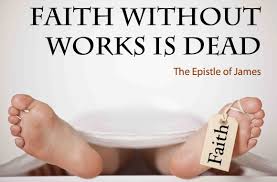
Faith without works (in line with repentance) is dead.   (Luke 3:8).

faith

Role Of A Pastor Or Overseer (Acronym 2)

1 Tim 3:1-13 gives the qualification of an overseer or pastor.   The Bible clearly defines the role of a pastor to shepherd, feed, guide and lead the flock to spiritual growth and service to our Lord Jesus Christ.

1 Pet 5: 2-3

Shepherd the flock of God which is among you, serving as overseers, not by compulsion but willingly, not for dishonest gain but eagerly; nor as being lords over those entrusted to you, but being examples to the flock.

In my recent ministry to Bacolod, Philippines, I noticed these prominent characteristics of pastors in the less developed countries as compared to the more developed countries.

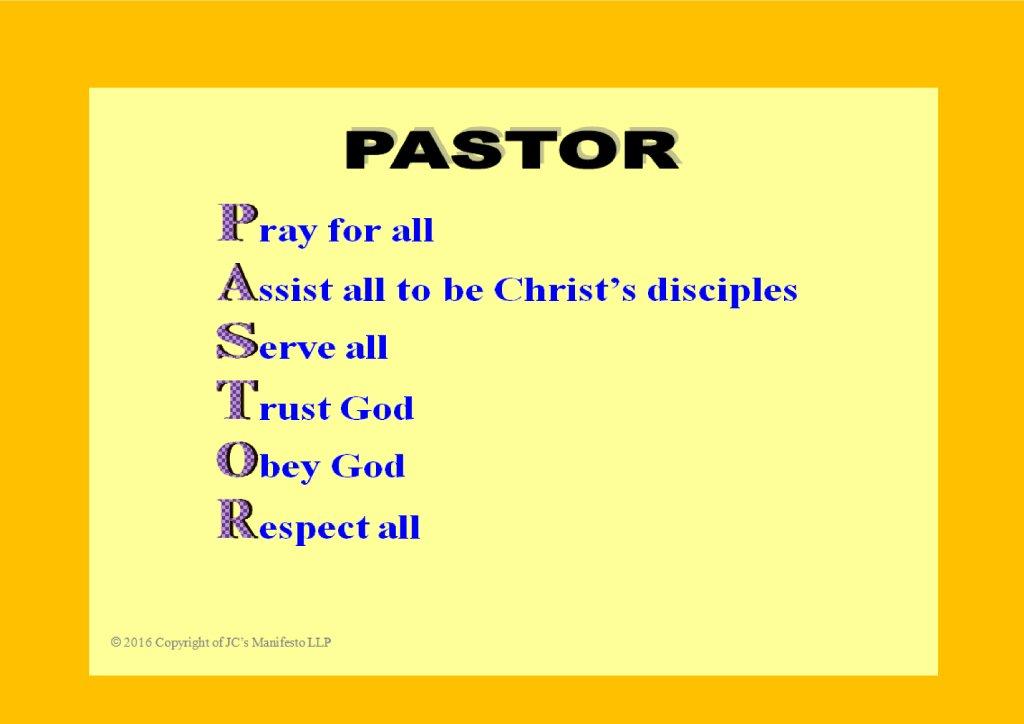
These Filipino pastors prayed earnestly for the spiritual awakening in the church and nation, and they manifest servant-hood service,  respect for all giving more honor to the lowly, exceptional hospitality and persistence in their constant earnest exhortation to the church to trust and obey God.    And I noticed that the acronym of PASTOR describes these characteristics.

Doc1-page-0-1 (2)


Discipleship Is Not An Option

Discipleship is never an option for a Christian.  Jesus has to be our personal Savior and Lord as well.   He had laid down the terms of following Him in Luke 14:26, 27 and 33.

26 “If anyone comes to Me, and does not hate his own father and mother and wife and children and brothers and sisters, yes, and even his own life, he cannot be My disciple. 27 Whoever does not carry his own cross and come after Me cannot be My disciple. 33 So then, none of you can be My disciple who does not give up all his own possessions.

On the surface, these 3 terms – surrendering all relationship, self ambition and possessions – seem terribly harsh.  The rich young ruler walked away sadly from our Lord because he could not give up all his possessions.  Luke 18:18-25.  If he could not surrender his possessions to Jesus, Mammon was still his god and entering heaven was hard for such rich people.

But if we see this life as the training period we have to go through under the tutelage of the Spirit of our Lord and surrender all relationship, self ambitions and possessions, we can eventually understand all this discipline, though painful at times, will yield in us the fruit of righteousness.  On the contrary, when we seek the kingdom of God and His righteousness first, all these things will be added to us.  Matt 6:33.

It is a paradox. When you give up, you have it.  But when you refuse to give up, you lose it.

He who finds his life will lose it, and he who loses his life for My sake will find it.  Matt 10:39.

Scripture exhorts us to endure trials or suffering as discipline from God to train us in righteousness.  Heb 12: 7-11. NIV.

Scripture further adds that we ought to rejoice in suffering for it produces hope in the end.

Rom 5:3-5

Not only that, but we rejoice in our sufferings, knowing that suffering produces endurance, and endurance produces character, and character produces hope, and hope does not put us to shame, because God’s love has been poured into our hearts through the Holy Spirit who has been given to us.

By surrendering to the terms set by our Lord to be His disciples, He is actually protecting us.

If any mishap happens to our family and loved ones and we have truly surrendered them to the sovereignty of God, there will be no devastating hurt as we know eventually all are appointed to die once and after that comes judgment.

If we lose our job or business and we have truly surrendered to the sovereignty of God, there will be no crushing damage to our self esteem as we believe contentment with godliness is great gain and we are content with just food and lodging.

If we lose all our possessions which anyway have belonged to our Lord when we have surrendered,  what other material loss can devastate us ?

Rom 8: 18

18 For I consider that the sufferings of this present time are not worth comparing with the glory that is to be revealed to us.

The coming glory will fulfill every good human aspiration.  That is the Christian hope.

dis1

Prayer Of Jabez

1 Chron 4: 9 -11

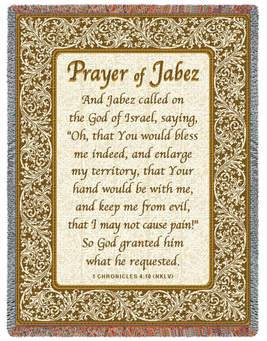
Jabez was more honourable than his brothers. His mother had named him Jabez, saying, “I gave birth to him in pain.” Jabez cried out to the God of Israel, “Oh, that you would bless me and enlarge my territory! Let your hand be with me, and keep me from harm so that I will be free from pain.” And God granted his request.

Common sense tells us that it will be too far-fetched to believe we can unlock the secrets of success through just a prayer chant making God into a genie and not a Sovereign God as a result.

An honourable man has these qualities and God will surely entrust true riches to such a person who fear Him also. Luke 16:10-11.

1. Honour. It is defined as honesty, fairness or integrity in one’s beliefs and actions. We must develop a pure sense of honesty, integrity and fairness in every aspect of our lives. Titus 2: 11-12

2. Humanity. It is defined as the quality of being humane; the kind feelings, dispositions, and sympathies of man; especially a disposition to relieve people in distress, and to treat them with kindness and tenderness. Prov 19:17; Ps 41:1-3

3. Perseverance. It is defined as steady persistence in a course of action, especially in spite of difficulties, obstacles or discouragement. James 1:2-4;12; 5:11

pj