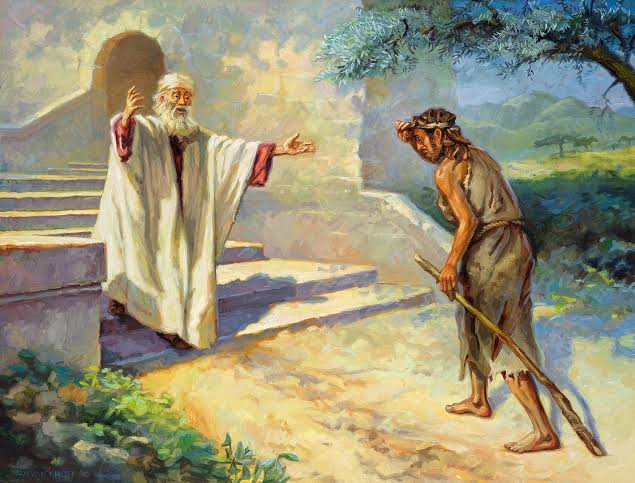
In Luke 15, Jesus presents two lost sons, and both illustrate different aspects of the need for repentance.
Repentance (Greek: metanoia) literally means a change of mindthat results in a change of direction. It is much deeper than remorse, guilt, or merely trying to improve one’s behavior.
The younger son demonstrates true repentance in several ways:
- He came to his senses (Luke 15:17). He recognized that the life he pursued apart from his father was a dead end.
- He changed his view of his father. He remembered that his father’s servants were well cared for. His father was not a tyrant but a good and generous father.
- He acknowledged his sin: “Father, I have sinned against heaven and before you.” He did not excuse or justify himself.
- He returned to his father, entrusting himself to his father’s mercy rather than demanding his rights.
Notice that the turning began before he was embraced. His outward return was the fruit of an inward change. (God in His sovereignty will see the inward change. Before he returned, he confessed his sins.)
The older brother exposes another kind of lostness. Although he never left home physically, his heart was far from his father.
He believed:
- His relationship with his father was based on performance.
- His obedience earned him greater merit.
- His brother deserved condemnation rather than grace.
He knew his father’s house but did not know his father’s heart. He viewed himself as a servant earning wages instead of a beloved son enjoying fellowship.
So, true repentance is not merely:
- feeling sorry,
- making resolutions,
- turning over a new leaf,
- or even changing outward behavior.
It is a change of heart and mind about God, ourselves, and sin.
It involves realizing:
- God is good and worthy of our trust.
- My way apart from Him leads to death.
- I cannot save or justify myself.
- I willingly return to Him, relying on His mercy rather than my own righteousness.
In that sense, both brothers needed repentance. The younger had to repent of rebellion, while the older had to repent of self-righteousness. One trusted in sinful pleasure; the other trusted in moral achievement. Neither truly understood the father’s grace until confronted by it.
This is why Jesus told the parable in response to the Pharisees. The tax collectors and sinners resembled the younger son, while the Pharisees resembled the elder brother. Jesus was inviting both groups to the same repentance—not simply a change of conduct, but a return to the Father’s heart.
A concise way to summarize it is:
True repentance is abandoning both self-will and self-righteousness because we have come to know the goodness of God. It is turning from trusting ourselves to trusting the Father’s love, mercy, and wisdom, and returning to Him as beloved children rather than trying to live independently or earn His acceptance.