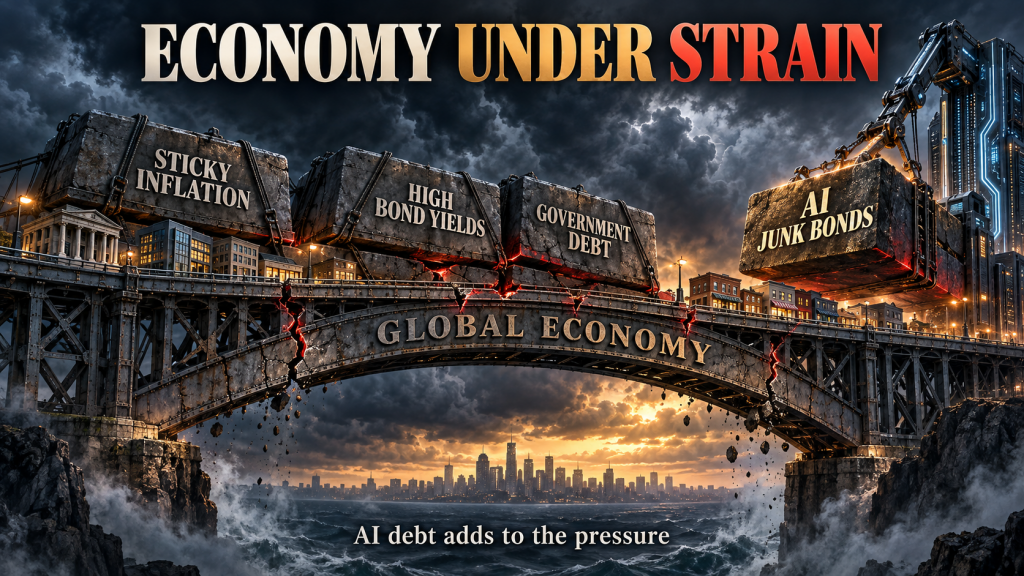
If the combination of sticky inflation and skyrocketing bond yields is left unchecked, the worst-case macroeconomic outcomes could culminate in a synchronized global debt crisis and a severe economic depression.When government borrowing costs exceed economic growth rates, the financial system faces systemic vulnerabilities.
The Worst-Case Economic Cascades
1. Sovereign Default Cascades & “Fiscal Dominance
The Risk: As government interest payments swallow an ever-larger share of tax revenues, highly indebted nations may face a choice between defaulting on their debt or forcing central banks to print money to inflate the debt away.• The Consequence: This would trigger a collapse in currency values, hyperinflation, and a total loss of confidence in Western financial institutions.
2. Systemic Banking Crises (The “Doom Loop”)
The Risk: Commercial banks hold massive portfolios of sovereign bonds as capital reserves. As bond yields spike, the market value of these existing, lower-yielding bonds plummets, creating massive unrealized losses on bank balance sheets.• The Consequence: A repeat of the 2023 regional banking panic, but on a global scale. Banks would halt lending entirely, freezing the credit lines that businesses rely on for daily operations.
3. Hyper-Stagflation
The Risk: Supply-side shocks (like energy blockades or AI resource constraints) keep inflation high, while central banks keep interest rates elevated to combat it.• The Consequence: A deep economic recession where unemployment spikes, but prices continue to rise relentlessly. This is the hardest economic scenario to fix because traditional monetary policy tools fail.
4. Emerging Market Bankruptcy
The Risk: A soaring US Treasury yield strengthens the US Dollar. Developing countries that borrowed money in USD find their debts suddenly ballooning in local currency terms.• The Consequence: Mass defaults across emerging economies, cutting them off from global trade, halting infrastructure projects, and triggering widespread social and political instability.
Compounding the current woes of skyrocketing bond yields and sticky inflation is the AI capital expenditures of the primary hyperscalers severely bleeding the companies’ free cash flow which can transform an insulated corporate sector problem into a concentrated systemic risk. If these data centers fail to hit the required monetization thresholds to justify the spend, the fallout will not be contained to Silicon Valley. They are already competing with the US government at the external debt markets and they are heading towards junk territory. That will increase borrowing cost for the broader corporate world.